Bubbles and Boards: A Sparkling Cheese Odyssey
Unveiling the enduring synergy between effervescence and artisanal cheese.
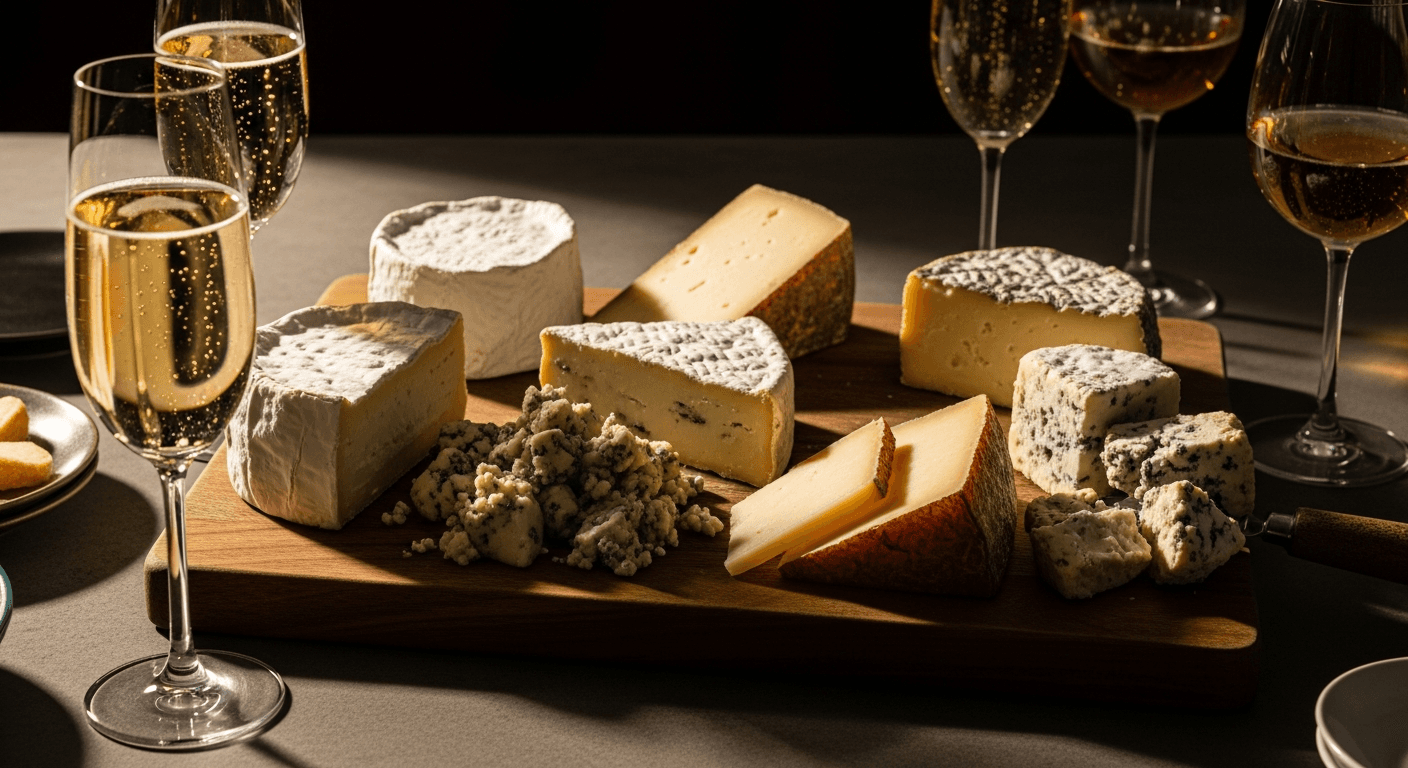
For generations, the default assumption for a cheese board has been a robust red wine, a convention deeply ingrained in culinary tradition. Yet, this pairing often proves more challenging than satisfying, with tannins clashing against the delicate proteins and fats of many cheeses, leading to an astringent, sometimes bitter, sensation on the palate. It is, in fact, sparkling wine that emerges as the cheese's most steadfast and versatile companion, a truth perhaps less celebrated but undeniably more harmonious. The history of pairing wine and cheese stretches back millennia, with evidence of cheese-making dating as far as 6000 BC, and early civilisations likely discovering natural pairings through trial and error. Monasteries during the Middle Ages, cultivating both vineyards and cheesemaking, further refined these combinations, laying the groundwork for the sophisticated pairings we appreciate today.
The inherent qualities of sparkling wine make it an unparalleled partner for a diverse array of cheeses. Its hallmark acidity and effervescent bubbles act as a natural palate cleanser, cutting through the richness and butterfat that cheeses leave on the tongue, refreshing the mouth and preparing it for the next delectable bite. This dynamic interplay prevents the palate from becoming fatigued, allowing the nuanced flavours of both the cheese and the wine to shine through. From light, creamy textures to dense, crystalline varieties, sparkling wine's spectrum of styles-from bone-dry Brut Nature to sweeter Demi-Sec-offers a pairing solution for nearly every cheese imaginable, creating a symphony of contrasting and complementary notes.
Consider the fresh, tangy allure of chèvre, a goat's milk cheese renowned for its bright acidity and often crumbly, sometimes creamy, texture. Its characteristic 'goaty' flavour finds a perfect counterpoint in sparkling wines that mirror its vivacity. A Crémant de Loire, particularly one with a Chenin Blanc-dominant blend, offers lively acidity and notes of green apple and citrus that beautifully complement the cheese's tang, creating a clean, smooth mouthfeel. Similarly, a Blanc de Blancs Brut Champagne, made exclusively from Chardonnay grapes, provides the requisite freshness and tension to harmonise with the delicate, slightly acidic notes of fresh chèvre, enhancing its subtle flavours without overwhelming them.
Alpine Elegance and Spanish Spirit
Moving to the Alpine-style Comté, a French cheese from the Jura mountains, its pairing potential evolves significantly with age. A young Comté, typically aged 5 to 7 months, presents fresh, milky aromas with hints of fruit and a creamy texture. This milder profile is ideally matched with a crisp Blanc de Blancs Champagne, whose citrus notes and minerality complement the cheese's subtle fruitiness, or even a light, fruity Prosecco. As Comté matures to 12-18 months, developing more pronounced nutty, caramel, and sometimes toasted almond notes, it calls for a more structured sparkling wine. A classic Brut Champagne or a Crémant du Jura, made using the méthode champenoise from Chardonnay, Poulsard, and Pinot Noir grapes, provides the necessary body and autolytic complexity-think brioche and toast-to stand up to the cheese's intensifying character. For an extra mature Comté, aged 18 months or more, a vintage Champagne or a rich Rosé Champagne Brut can offer an exquisite marriage, with the wine's depth and fruitiness enhancing the cheese's complex dried fruit and spice notes.
From the sun-drenched plains of La Mancha in Spain, Manchego cheese, crafted from the milk of Manchega sheep, offers a firm texture and a flavour profile that ranges from mild and grassy in younger versions to nutty, tangy, and peppery with extended ageing. For this iconic Spanish cheese, a regional sparkling wine is often the most inspired choice. Cava, the traditional-method sparkling wine of Spain, proves to be an excellent partner. Its bright acidity and fine, persistent bubbles cut through Manchego's richness, cleansing the palate and highlighting the cheese's nutty and slightly sweet characteristics. A Cava de Guarda Superior Gran Reserva, with its developed toasty and nutty notes, harmonises beautifully with aged Manchego, bringing out flavours of coconut, almond, and apricot. When serving Manchego with accompaniments like Marcona almonds or quince paste, Cava's versatility shines, making it a staple for any tapas board.
The Bold and the Bubbly
The challenging yet rewarding realm of blue cheese finds an unexpectedly elegant partner in sparkling wine. Blue cheeses, such as Roquefort or Gorgonzola, are known for their pungent, salty, and creamy characteristics, which can overwhelm many wines. However, sparkling wine's acidity and effervescence provide a crucial counterpoint. For intensely flavoured blue cheeses, a Demi-Sec Champagne or a sweeter sparkling wine like Moscato d'Asti or a Jura Vin de Paille can create a magical balance, where the wine's sweetness tames the cheese's saltiness and sharpness. The rich, honeyed notes of a Vin de Paille, for instance, are the 'gold standard' with Roquefort, providing a lush, balanced experience. For milder blue cheeses, a Brut or Rosé Champagne can still work, offering a refreshing contrast that softens the cheese's intensity and highlights its creamy texture.
The true brilliance of sparkling wine in cheese pairing lies not just in its ability to cleanse and refresh, but in its capacity to elevate the entire gastronomic experience. These pairings transcend the simple act of eating, transforming a cheese board into a curated journey of texture and flavour. Whether as an aperitif, setting a sophisticated tone for an evening, or as the centrepiece of a celebratory gathering, the effervescence of a fine sparkling wine brings a lightness and festive energy that few other beverages can match.
To fully appreciate this enduring synergy, one must embrace experimentation. Begin with the classic pairings, such as Crémant de Loire with a fresh chèvre, or an aged Comté with a structured Brut Champagne. Then, venture further, perhaps trying a Cava de Guarda Superior with an aged Manchego, or a Demi-Sec with a creamy blue. Notice how the fine bubbles interact with the cheese's texture, how the acidity brightens the palate, and how the wine's aromatic profile either contrasts or complements the cheese's unique characteristics. This exploration is not merely about finding a 'perfect match' but discovering personal preferences and the sheer delight that emerges when mull meets juust. It is a testament to the enduring elegance and versatility of sparkling wine, inviting us to reconsider our cheese board traditions and embrace a more effervescent future.
More from the cellar.
Bottle Shock: The Unseen Travail of Transported Wine
Unravelling the debate: does wine truly need repose after its journey?
Tasmania's Ascendant Sparkling Wines
Australia's cool-climate island is redefining premium Méthode Traditionnelle.
Non-Vintage: A Cellar Master's Legacy
Behind Champagne's enduring house style lies the profound skill of its guardian.