Demi-Sec Sparkling: The Foie Gras Paradox
Beyond tradition, a sweeter sparkler offers compelling contrast to a rich delicacy.
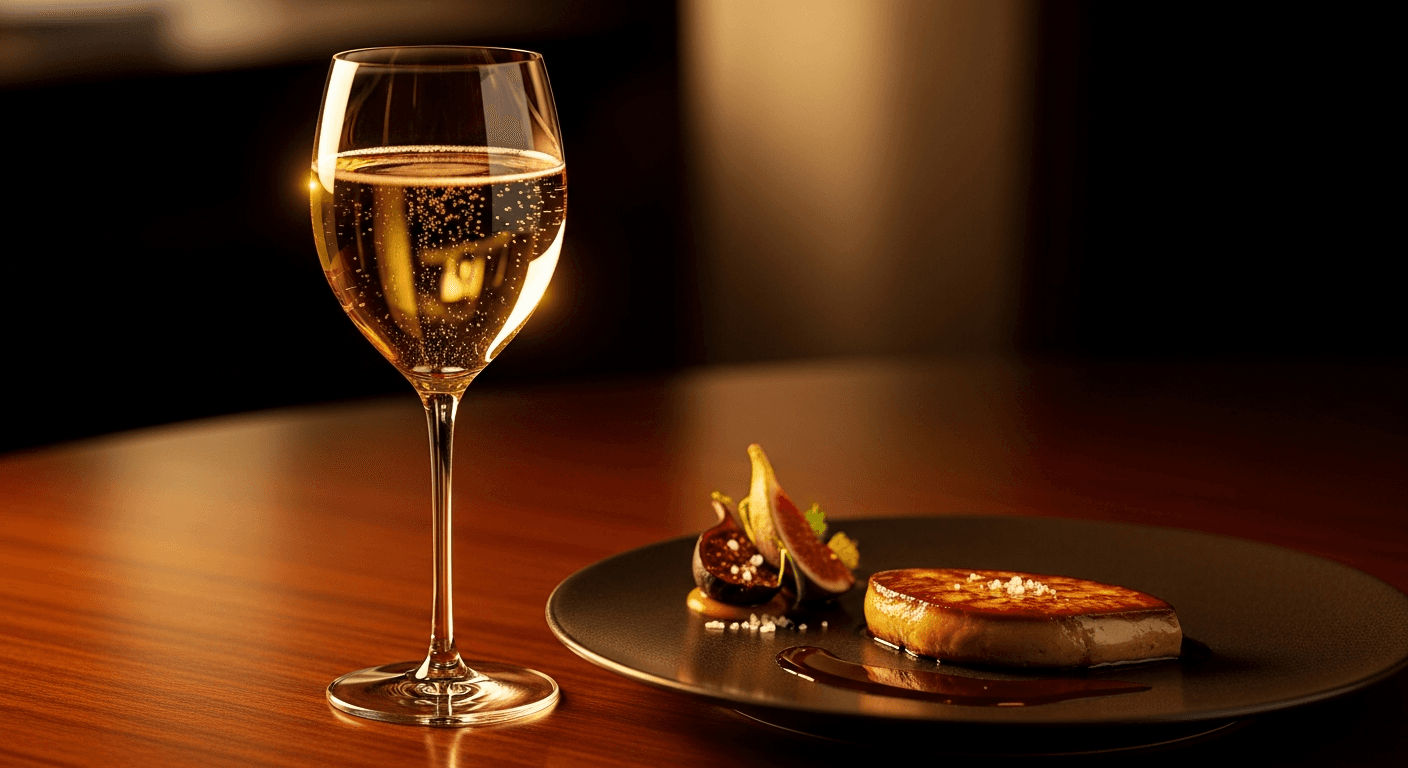
For centuries, the conversation around foie gras and wine has been dominated by the golden, honeyed embrace of Sauternes. This classic union, where the unctuous richness of the fattened liver meets the opulent sweetness and botrytised complexity of a noble rot wine, is etched into the very fabric of French gastronomy. Yet, in the evolving landscape of epicurean discovery, a seemingly counter-intuitive, sparkling alternative has emerged with compelling force: the demi-sec. This choice, once considered unconventional, now offers a sophisticated re-evaluation of how sweetness can interact with profound richness.
To appreciate this pairing, one must first understand the demi-sec. Literally translating to 'half-dry', this term is, in fact, rather misleading, as demi-sec sparkling wines are distinctly sweet, containing between 32 and 50 grams of residual sugar per litre. This level of Dosage, added after disgorgement in the Méthode Traditionnelle, positions it firmly in the medium-sweet category, a significant departure from the more prevalent Brut styles, which typically contain less than 12 g/L of sugar. Historically, sparkling wines were often much sweeter, with preferences shifting towards drier expressions over the 19th and 20th centuries, yet the demi-sec retains a loyal following, particularly for its versatility with certain foods.
Foie gras itself is a product of ancient culinary heritage, with evidence of fattening geese dating back to ancient Egypt between 2845 and 2400 BC. This delicacy, French for 'fat liver', is prized for its exceptionally rich, buttery, and delicate flavour profile, coupled with a smooth, luxurious, melt-in-the-mouth texture. Whether from duck, offering a more robust character, or goose, known for its refined finesse, foie gras presents a formidable challenge to any accompanying beverage due to its intensity and richness. The traditional sweet wine pairing works by mirroring this richness, but the demi-sec takes a different, more dynamic approach.
The Art of Contrast Sugar
The brilliance of pairing demi-sec with foie gras lies in the concept of 'contrast sugar' - the wine's pronounced sweetness and vibrant acidity act as a foil to the liver's decadent richness. While the sweetness of the sparkling wine harmonises with the inherent delicate sweetness often found in foie gras itself, its effervescence and acidity are crucial. The persistent stream of fine bubbles and the refreshing acidity of a quality demi-sec cleanse the palate, cutting through the unctuous fat and preventing the sensation of heaviness. This creates a 'stunning contrast', as noted by G.H. Mumm, making each bite and sip a renewed experience rather than a cloying one. The wine's fruit-forward profile, often featuring notes of ripe stone fruits like apricot and peach, honey, or candied citrus, also complements the earthy and sometimes subtly gamey notes of the foie gras.
This approach particularly shines with both forms of foie gras. A chilled terrine of goose foie gras, with its silky, refined texture, finds an elegant partner in a demi-sec, where the wine's delicate sweetness and refreshing qualities elevate the liver's subtlety. For pan-seared duck foie gras, often served with fruit reductions or spiced chutneys, the demi-sec provides a bridge, its residual sugar resonating with the sweet elements on the plate while its acidity offers a much-needed counterpoint to the seared richness. The metaphorical 'foil curls' of the foie gras-its delicate, rich, almost melting texture-are thus lifted and refreshed by the contrasting sugar and lively effervescence of the wine.
Producers and Palate Exploration
Several esteemed Champagne houses produce exceptional demi-sec expressions that are well-suited for this modern pairing. Laurent-Perrier's Harmony Demi-Sec is celebrated for its balance of sweetness and complexity, while Billecart-Salmon and Piper Heidsieck's Cuvée Sublime also offer compelling examples of the style. Veuve Clicquot and Moët & Chandon also craft popular demi-sec and Doux offerings, such as Veuve Clicquot Demi Sec or Moët & Chandon Nectar Impérial, which can provide a delightful experience. Beyond Champagne, other traditional method sparkling wines, such as certain Crémant de Bourgogne or even English sparkling wines, offer demi-sec styles that can provide similar gastronomic pleasure, often with a more accessible price point.
The pairing of foie gras with demi-sec sparkling wine is a testament to the dynamic evolution of culinary preferences, moving beyond rigid tradition to embrace thoughtful contrasts. It is an invitation to explore how the perceived 'sweetness' of a wine can, in fact, enhance and invigorate a dish of profound richness, rather than merely mimic it. Consider this pairing not as a deviation, but as an expansion of the classic, offering a vibrant, effervescent counterpoint that rejuvenates the palate and adds a layer of unexpected complexity. Seek out a well-crafted demi-sec and discover the elegant interplay of 'contrast sugar' with the luxurious 'foil curls' of foie gras; it is a pairing that truly matters for those who appreciate both tradition and innovation in equal measure.
More from the cellar.
Bottle Shock: The Unseen Travail of Transported Wine
Unravelling the debate: does wine truly need repose after its journey?
Tasmania's Ascendant Sparkling Wines
Australia's cool-climate island is redefining premium Méthode Traditionnelle.
Non-Vintage: A Cellar Master's Legacy
Behind Champagne's enduring house style lies the profound skill of its guardian.